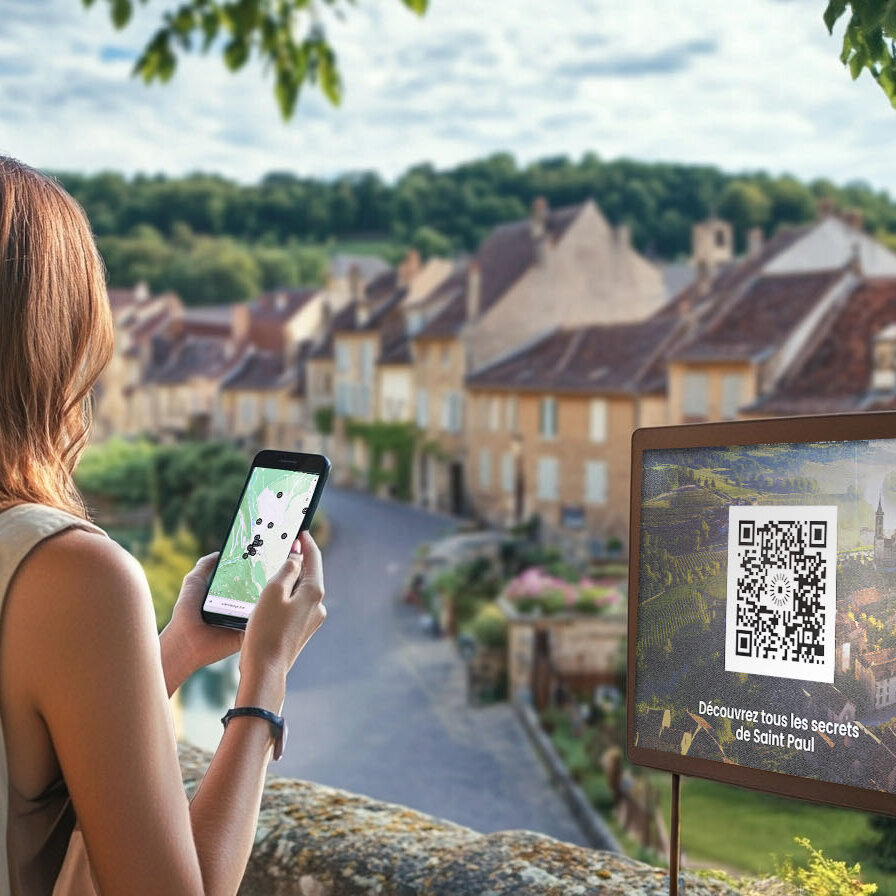
In many municipalities, a large part of the heritage remains invisible. Not because it lacks value, but because there is no simple tool to make it accessible. This is the gap that Genius Loci fills.
What sets us apart
Genius Loci is a cultural and tourism infrastructure designed for local authorities that want to enhance their heritage over the long term, with elegance and consistency.Genius Loci's positioning stems from years of experience, field observation and reflection, as well as a certain idea of what tomorrow's heritage signage should be.
We do not offer a one-off event, nor yet another app.
We build an official interface, customised in the colours of your area, accessible without any download, that turns every place into a deep point of interest (Deep POI), easily and lastingly accessible.
Our ambition is simple: to make heritage enhancement an everyday given. Simply a discreet piece of street furniture always within reach, delivering its value in the moment, just as our public benches do.

A city infrastructure
Where many solutions offer temporary or event-based experiences, Genius Loci establishes a permanent presence across the area.
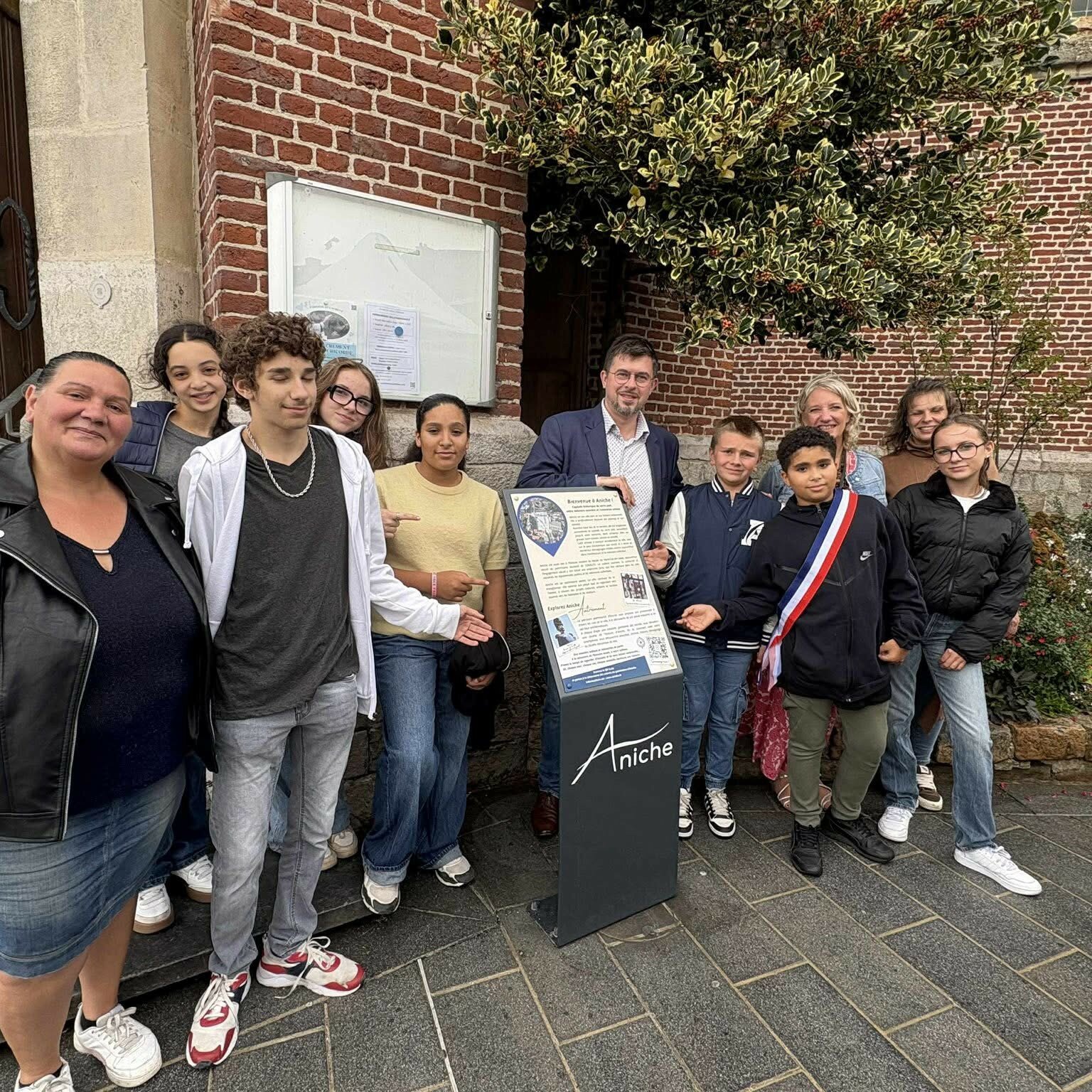
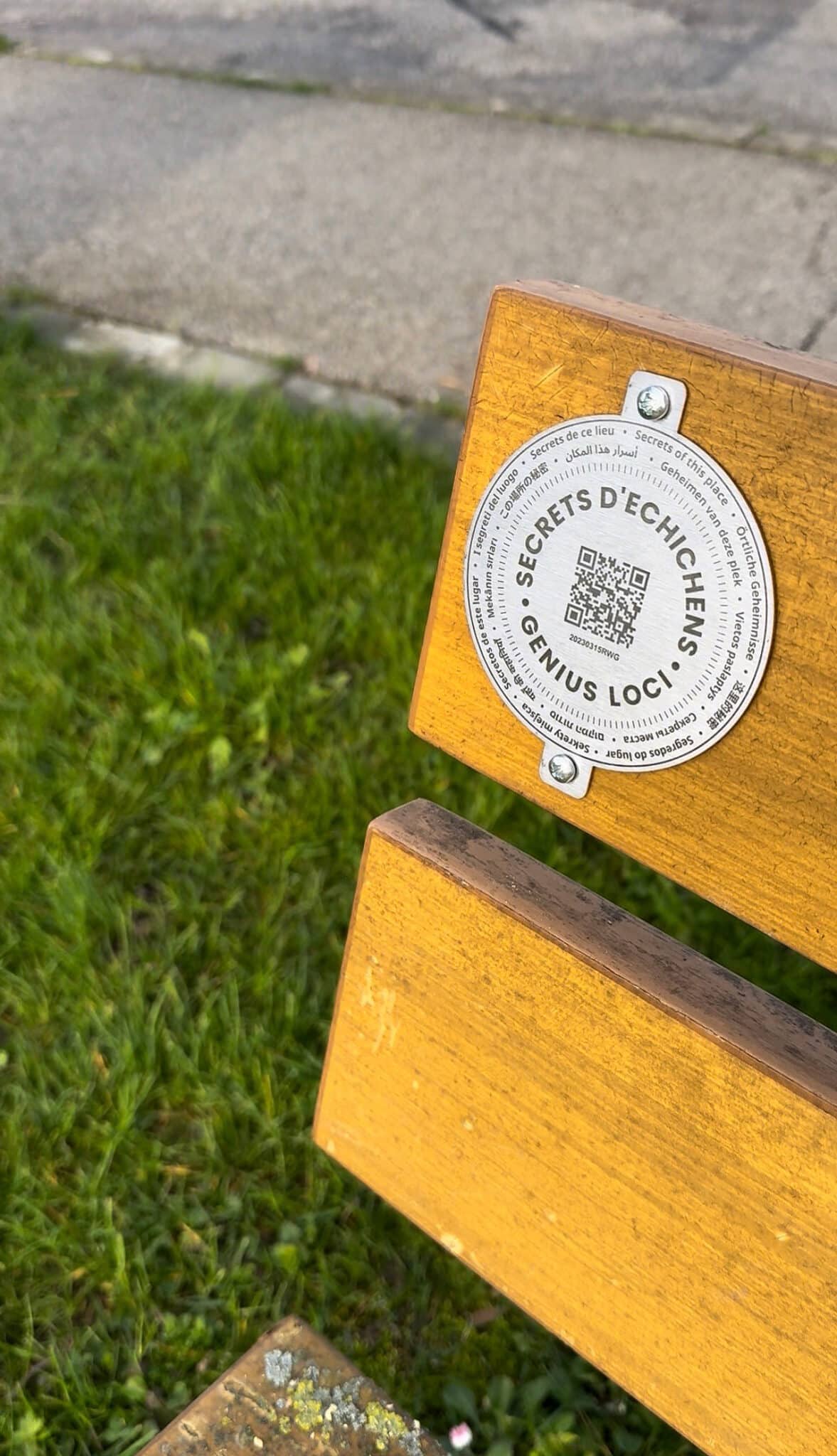
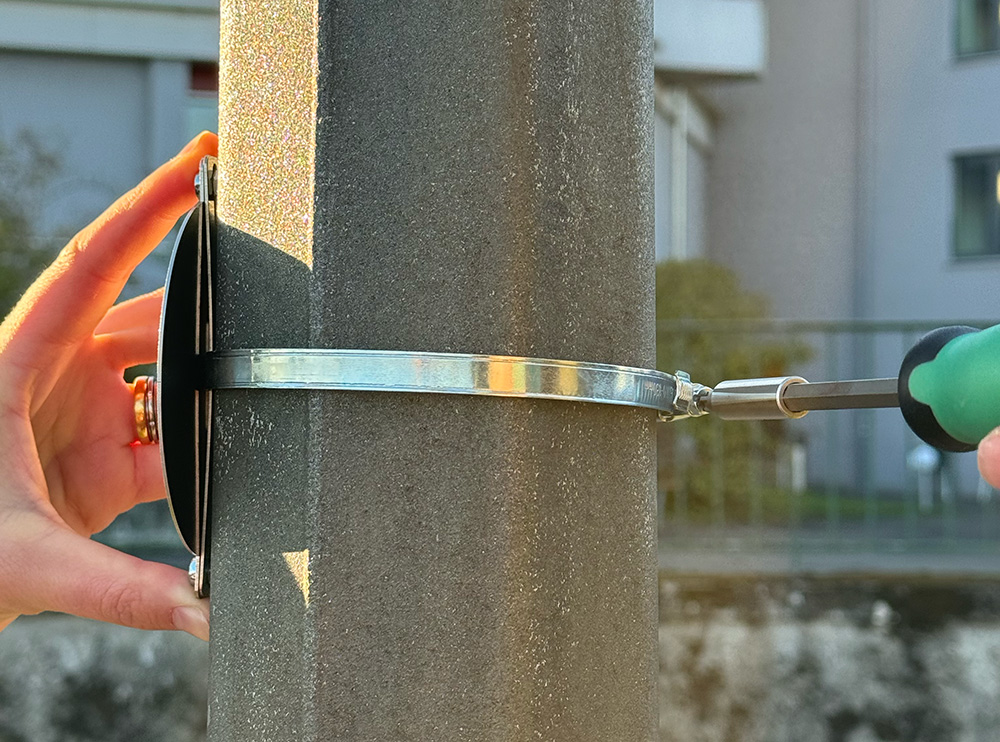
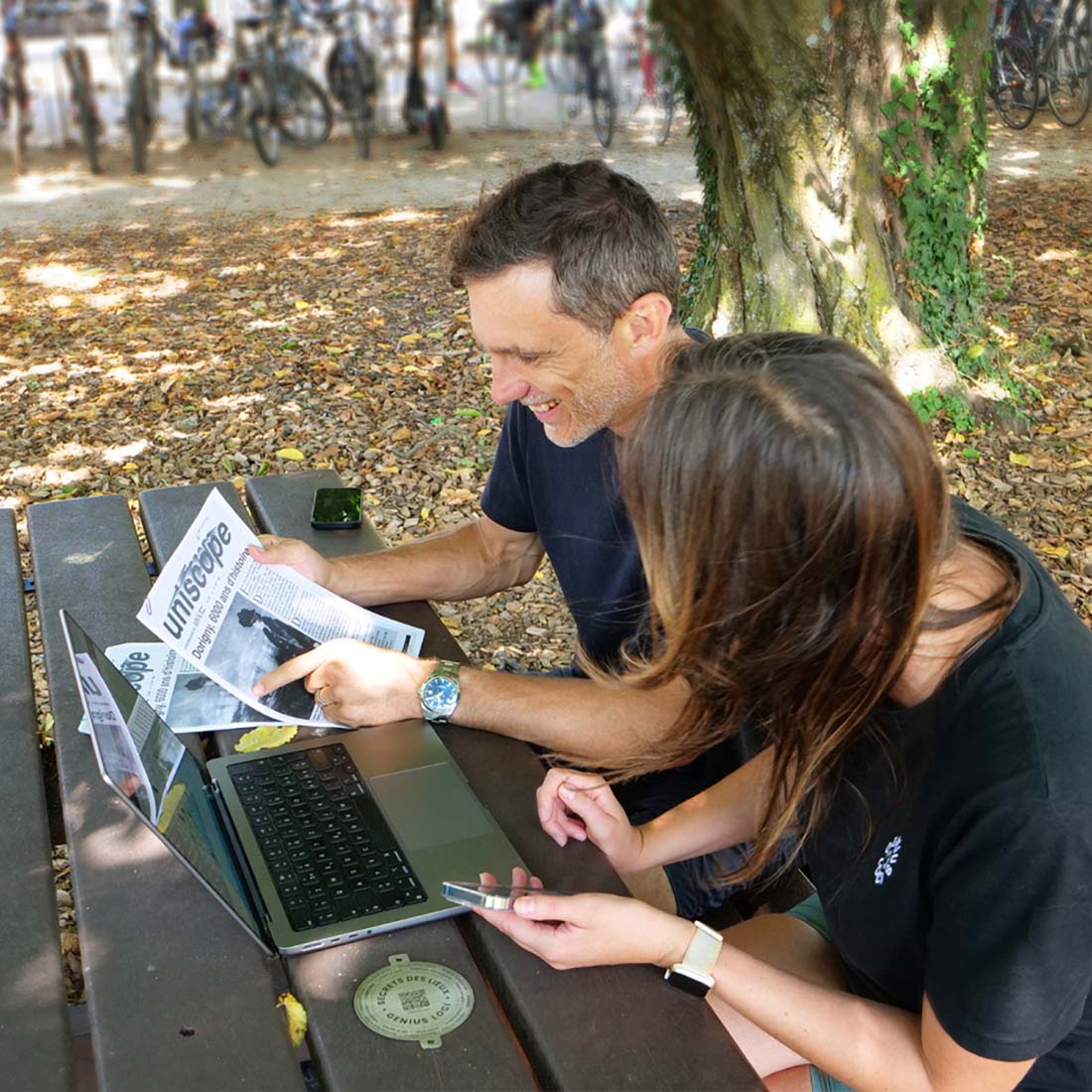
A small, discreet physical medal in stainless steel, screwed in place and built to last. An official digital interface. Immediate access, with no download.
The result: year-round enhancement, with no rapid obsolescence.
A fundamentally different approach
Tourist offices and municipalities are heavily solicited today.
Mobile apps, “turnkey” platforms, treasure hunts, escape games, interpretation solutions… the offering is vast, and often hard to compare.
This diversity is a strength. But it comes with a more complex reality:
- widely varying levels of quality
- fragile business models
- projects dependent on one-off funding
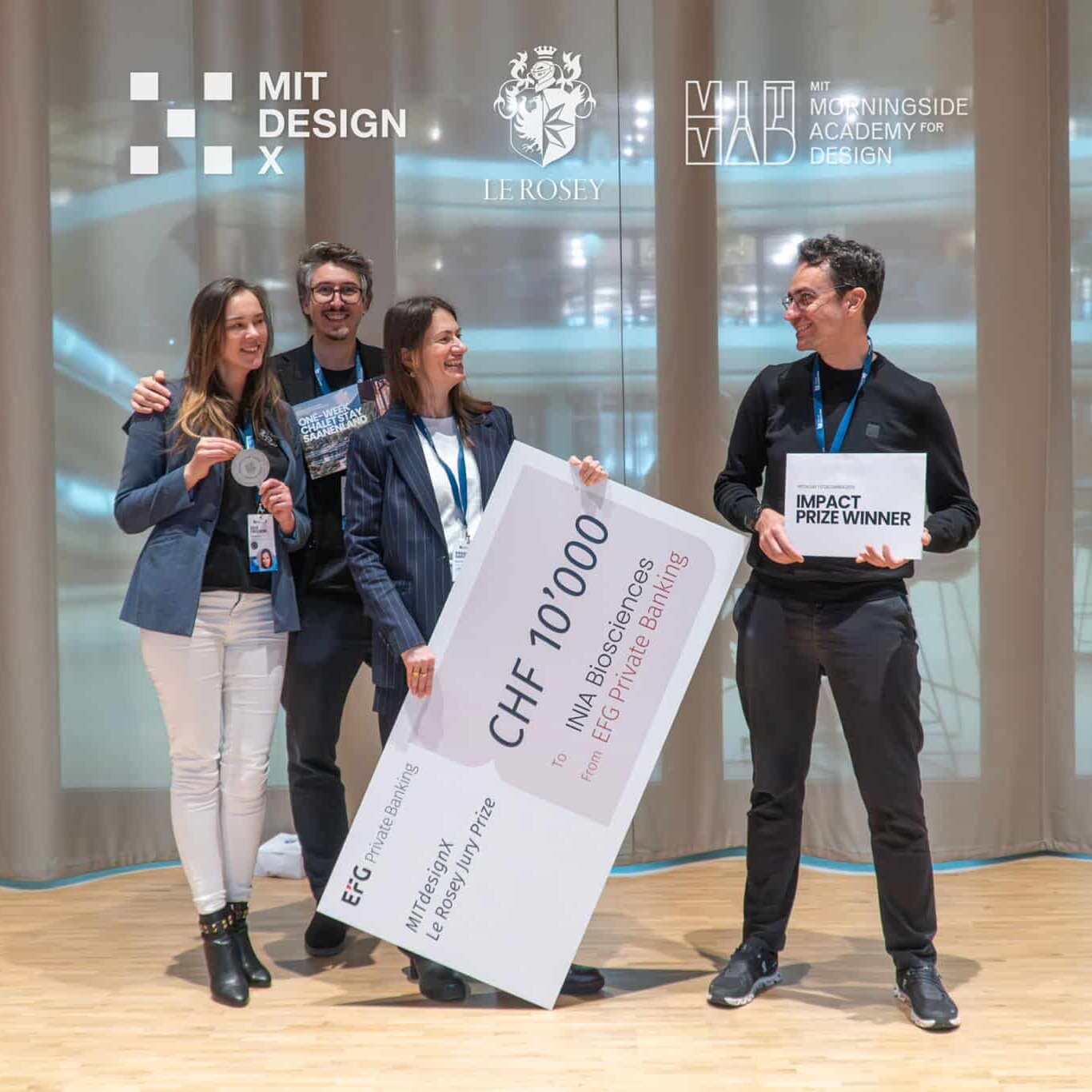
Designing a truly high-quality, durable and well-maintained solution requires significant, sustained investment. That is precisely what we have chosen to invest: our team specialises in UX design and innovation (through our parent company Design Sprint SA), which earned us recognition and acceleration by the MITdesignX programme.
The solutions we mention here are all serious and proven. We are not seeking to set them against one another, but to honestly situate the specific contribution of Genius Loci within this ecosystem.
The aim is not to oppose, but to clarify. Because these approaches are often complementary.


The major platforms
Genius Loci and Wikipedia
Wikipedia plays a fundamental role in access to knowledge. Its editorial rigour guarantees reliable, structured and universal information.
But this standard has a direct consequence on the ground:
- micro-heritage is very poorly represented there
- local anecdotes and oral accounts struggle to find their place because they are not “encyclopaedic”
- the reading remains disconnected from the physical place
- Respecting those who tell the stories: the accounts entrusted remain the property of their authors, with the right to amend or withdraw them at any time
The Genius Loci approach:
- Gathering the memory of invisible places
- Showcasing local stories, legends and the details that shape an area’s identity
- Anchoring discovery directly on site, where the history actually unfolded
We will never replace Wikipedia.
We extend its role, as close as possible to the ground.
Genius Loci and Google Maps
Google Maps has become a universal reflex. It lets you find your way, locate a place and quickly access practical information. Massive, worldwide coverage and immediate efficiency.
But this logic remains primarily utilitarian. The content is short, often standardised, and rarely designed to create a genuine understanding of the place. You pass through, you check, then you leave.
The Genius Loci approach is different. We turn every point into a deep, cultural experience. We let the city (and its people) recount, explain and provide context.
Where Google Maps helps you get somewhere, we help you understand why this place is worth stopping for.
Genius Loci and Tripadvisor
TripAdvisor sometimes plays a key role in guiding visitors, especially in large cities. The platform makes discovery, comparison and decision-making easier, particularly for restaurants, hotels and activities.
But this logic rests essentially on consumption. Places are reviewed, ranked and rated. What is visible is what is frequented (and often what sells). It is hard for a small artisan business that does not know the “codes” to exist on this kind of platform.
In this model, a large part of an area stays in the shadows: the discreet, non-commercial places that carry memory but have no visibility.
The Genius Loci approach is precisely to give value back to these spaces. We bring to light what does not sell, we recount what cannot be rated, and we create a more sensitive, more human relationship with the area. Giving the people a voice.
Tourism-oriented games
Since the announcement of “Genius Loci Aventures“, our product has been compared to other players that specialise in gamification. Often tourism- and family-oriented.
The DNA of Genius Loci is, however, very different: it is above all an official and “serious” heritage signage. In bringing gamification with Aventures, our ambition is not to create yet another “game” competing with the others, but a new paradigm: encouraging visitors to discover their region in depth, over a long period. Creating genuine pleasure and satisfaction in the slow, free discovery of an area rather than a heavily scripted experience.
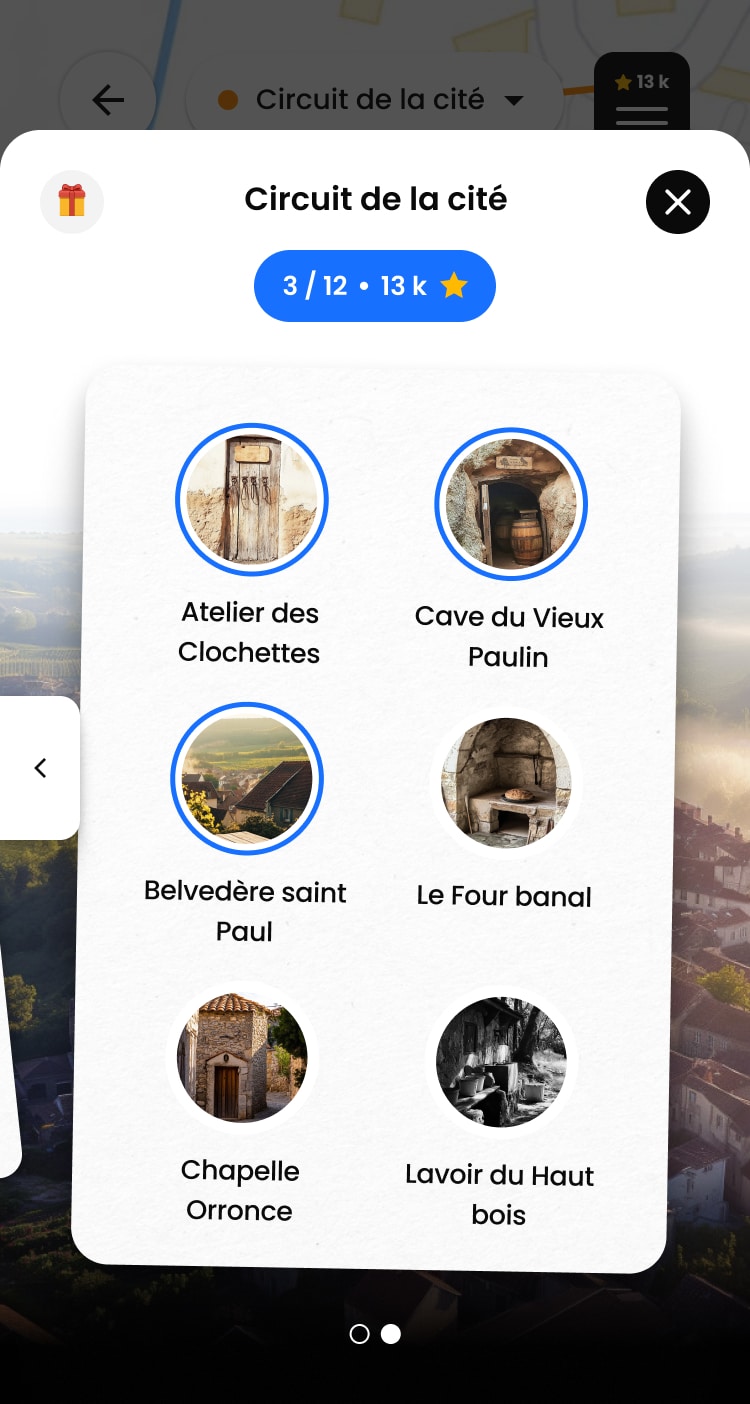
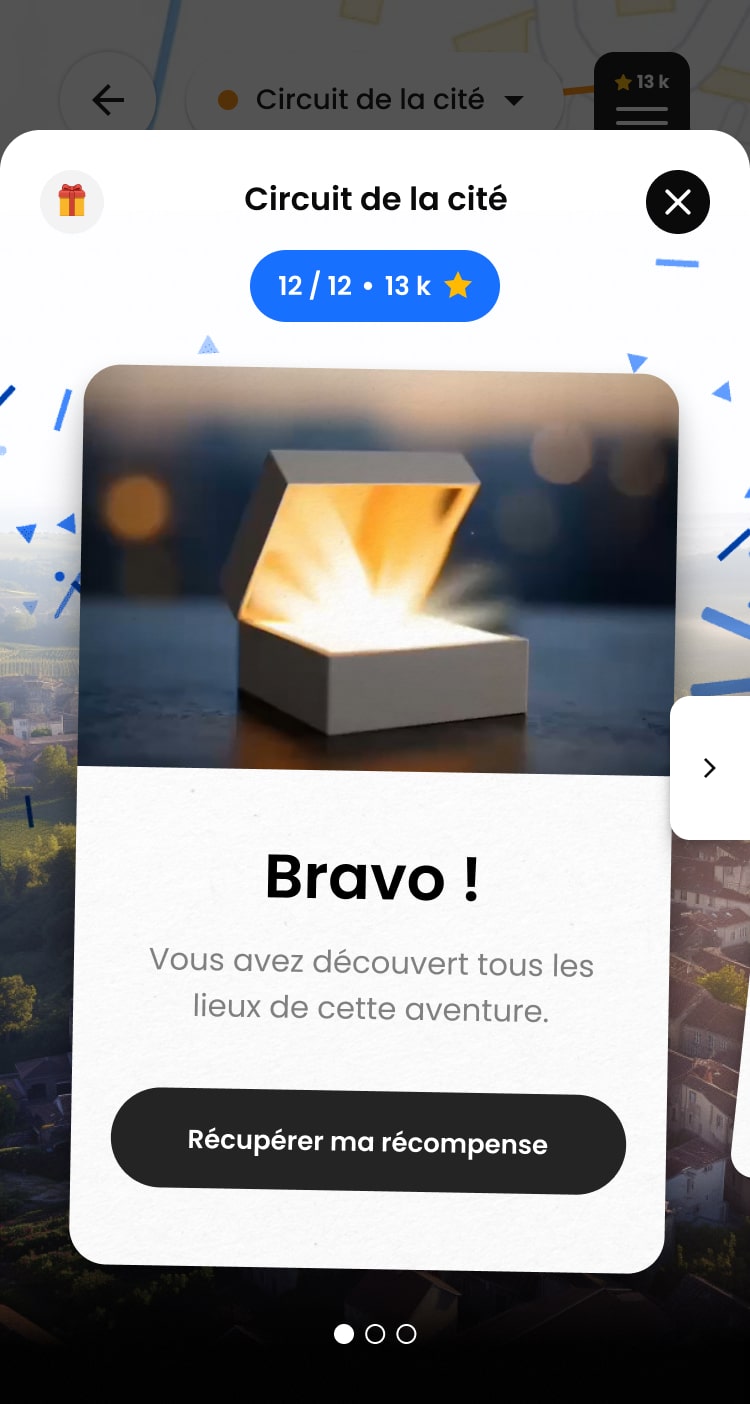
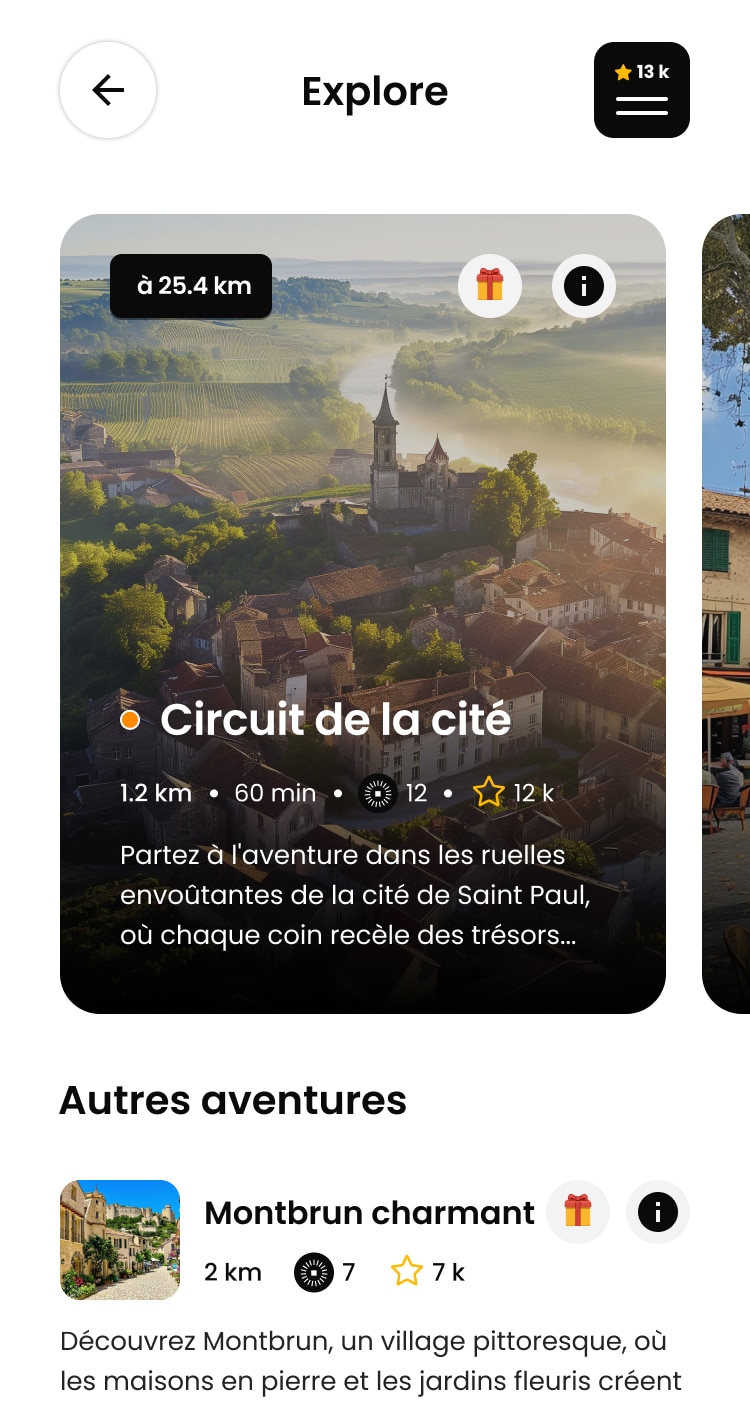
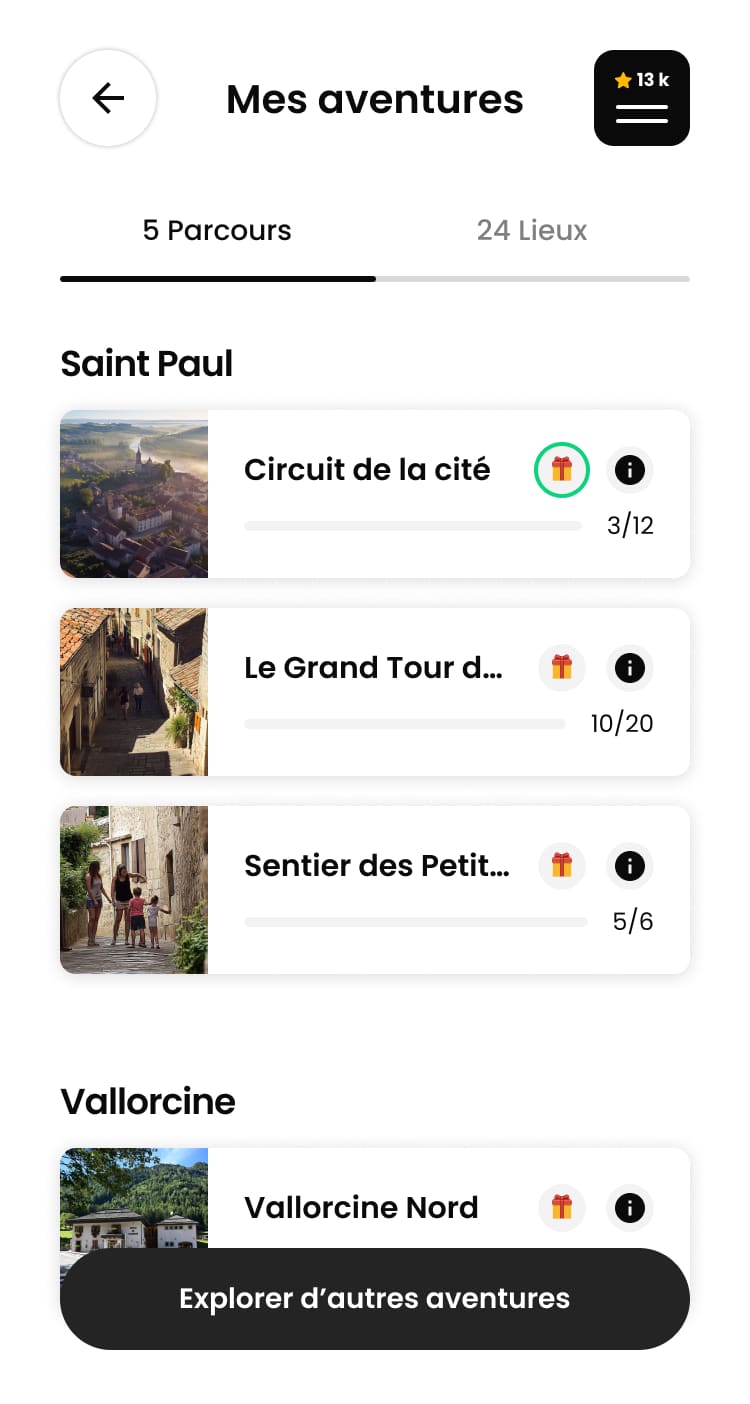
Genius Loci Aventures
A universal gamified discovery experience, within everyone's reach
The tourism “game” is often characterised by:
- a very short duration (1–2 hours)
- a family target audience, optimised for very young children
Genius Loci Aventures can be used to create this type of experience, of course, but we see greater value in promoting a much broader type of gamification.
In terms of interfaces and tone, we have made a deliberate design choice: no mascots, no characters, no fictional scenarios, no imaginary world overlaid on the area. What visitors encounter is quite simply the place itself, its history, its inhabitants, its stories — with no invented narrative filter.
It is a stance: we believe the discovery of a place is fascinating enough in itself.
It allows Genius Loci to speak with the same accuracy to children as to adults and seniors, to residents as to international visitors, without ever confining the experience to a single or overly themed register.
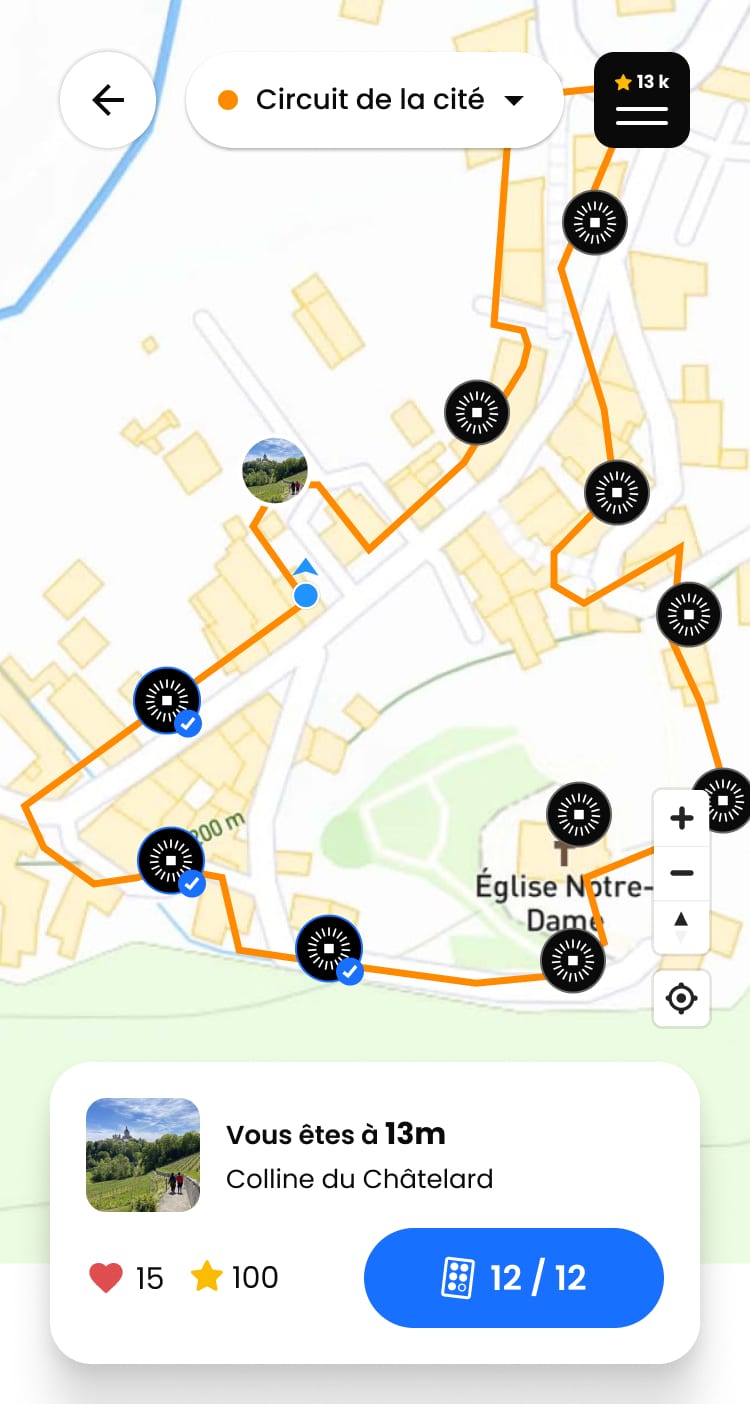
Instead, we offer simple, effective gamification that will appeal to a wide audience, inspired by stamp cards. A simple and elegant collection logic, and an experience that speaks as much to children as to adults and seniors.
The goal is to discover your region little by little, at your own pace, and to create an open interface that lets every town or village genuinely customise the experience.
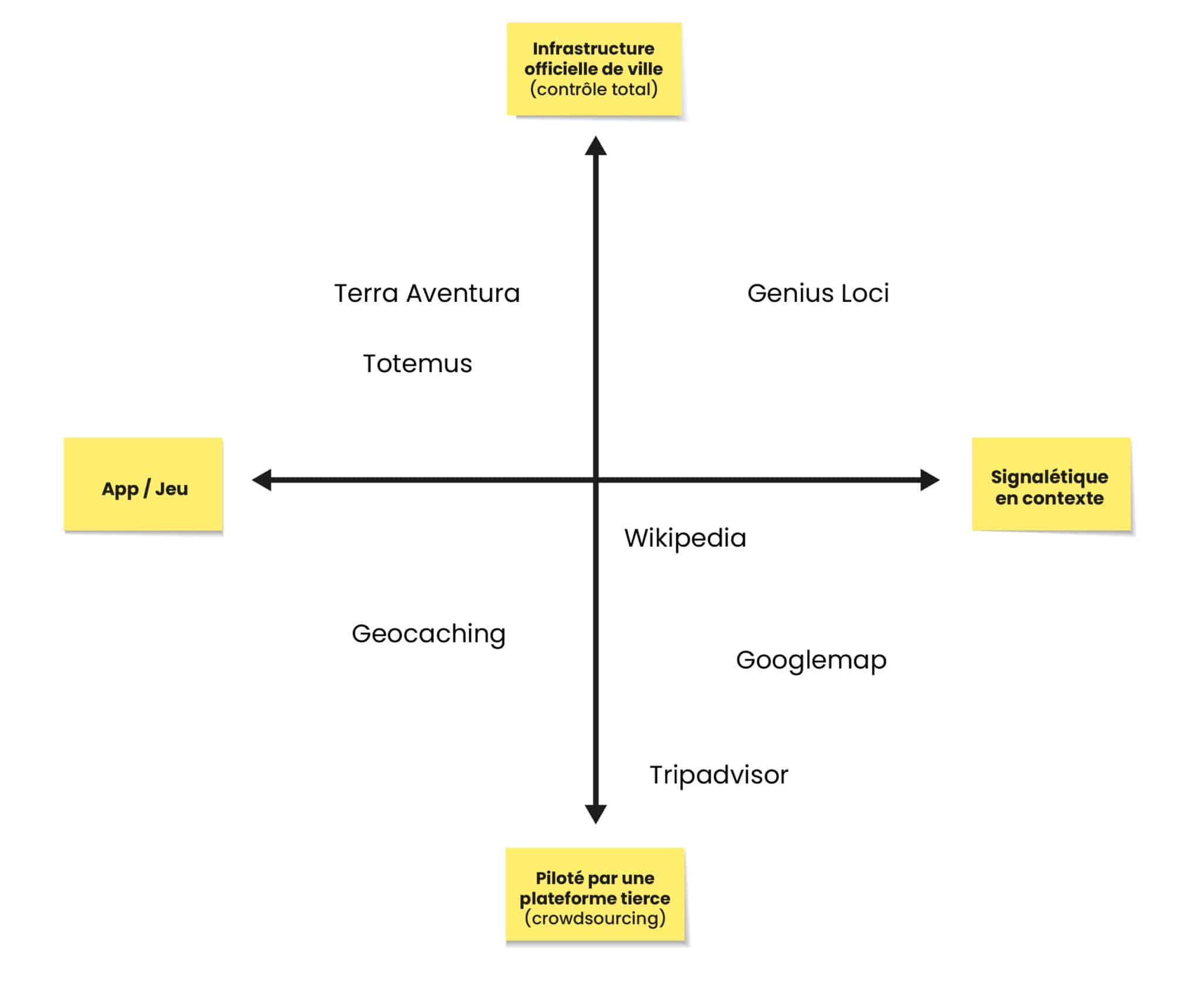
Compared with physical treasure hunts (Geocaching, Terra Aventura, Totemus)
These solutions are excellent for creating a fun, community-driven activity, often family-oriented. Terra Aventura, run by the Nouvelle-Aquitaine Region in France, has demonstrated the power of an institutional approach on a large scale across an area. Totemus has built a remarkable ecosystem alongside the Walloon tourist offices in Belgium. Geocaching has brought together an engaged worldwide community for more than twenty years.
Their model rests on clear and consistent choices: an identifiable format specific to each brand, physical objects to hide and maintain, an active community that keeps the experience alive, and a clearly assumed fun or family focus.
Genius Loci meets a different and complementary need: that of a genuine heritage infrastructure, on the scale of an area.
Not a game, not an event, not yet another app: a lasting, understated, elegant signage, integrated into street furniture as a public bench or a street nameplate can be. A stainless steel medal screwed in place to last for decades, with no box to hide, no cache to maintain, no vandalism to fear. The visual and editorial identity remains that of the municipality — it is your area that speaks, not a third-party brand.
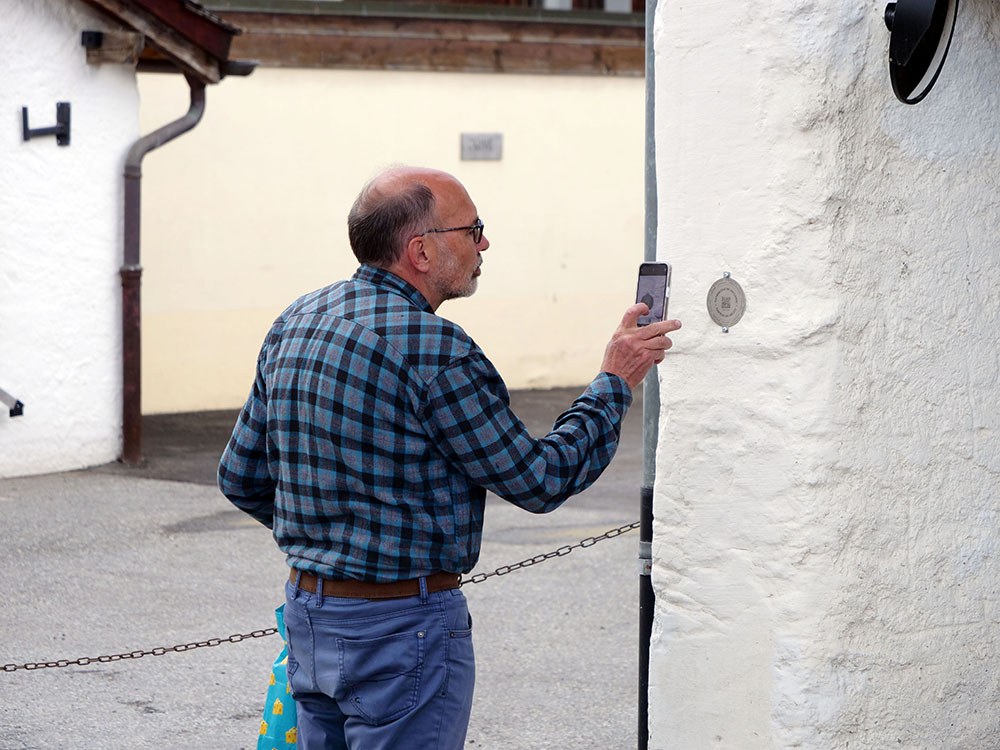
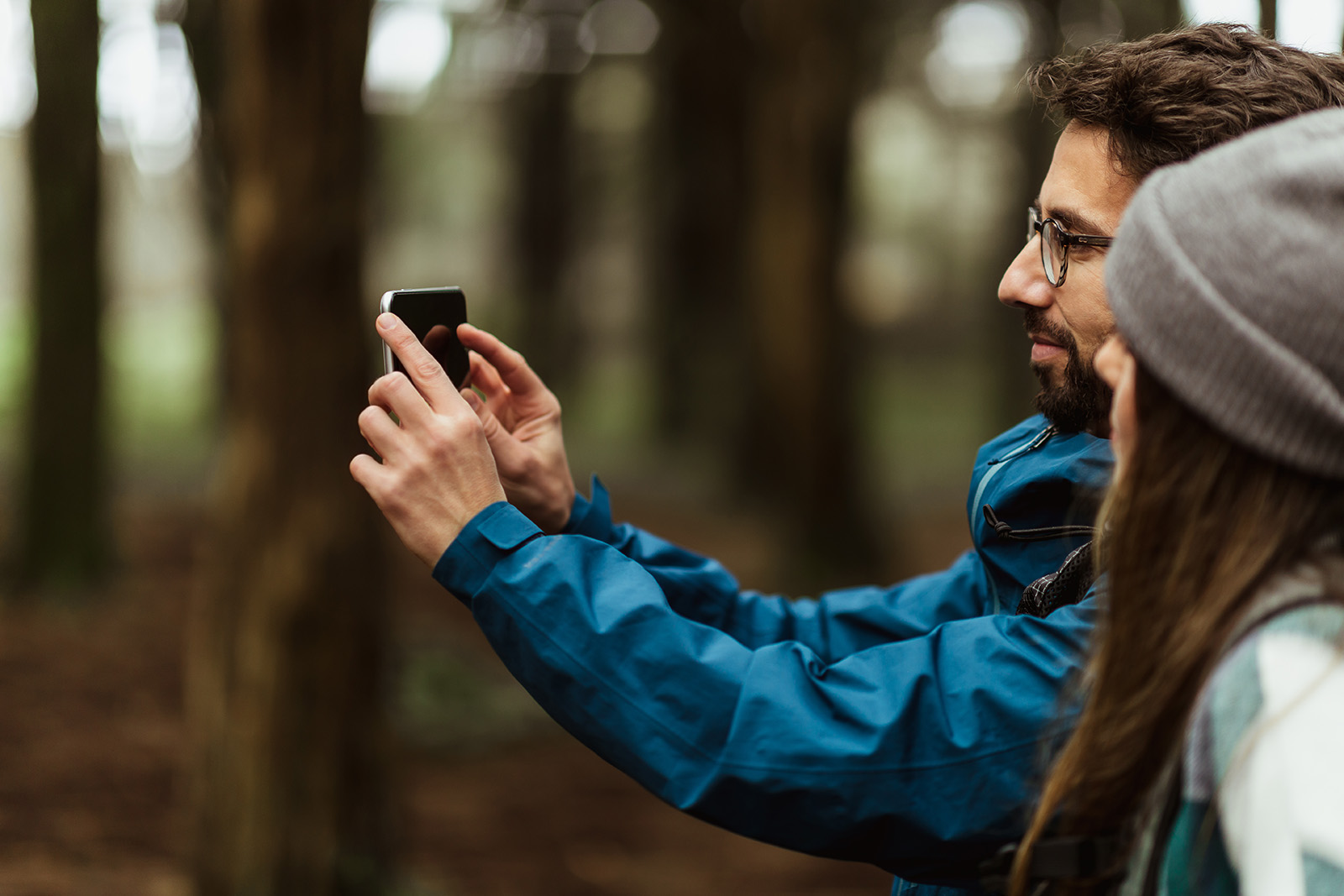
Access is immediate: a scan, with no download, no account, no code. The route is open to everyone: residents, passing visitors, older people, children, international tourists — whatever their age, their language or their familiarity with the conventions of games.
Where other solutions require prior commitment, solving puzzles or genuine involvement, Genius Loci simply lets itself be encountered.
And because the content is carried by the municipality itself (and its inhabitants, associations and enthusiasts), it tells what no generic platform could ever tell: the fine-grained memory of a place, its anecdotes, its oral accounts, its invisible micro-heritage. This is our Deep POI: a deep point of interest, where others limit themselves to a point on a map.
If the “reward” aspect matters, Genius Loci Aventures allows local authorities and tourist offices that wish to do so to give gifts to visitors who complete an Adventure (all the stamps collected). A playful layer that grafts naturally onto the infrastructure, without ever becoming its core.

Compared with escape games and scripted treasure hunts
These experiences are powerful, immersive and high-quality. But they remain short-lived (2 to 3 hours), costly to produce and renew, limited in time and space, and often require staff to be present on site.
It is a bit like the four-star of the tourist experience. Highly qualitative but hardly scalable.
The Genius Loci approach: a permanent infrastructure. Complete flexibility (30 minutes or 6 months of exploration). A free experience, with no booking constraints.
And above all: we do not replace these experiences: they keep their own strength, in their own format. Genius Loci offers a lasting infrastructure layer that can coexist with them across an area, and which local authorities, associations or route creators can freely build on to extend their own initiatives.
What Genius Loci brings concretely to your area
Zero complexity, an interface designed to be used by everyone and for all kinds of heritage projects
Your town or village creates its own content, sometimes with the help of the local people or enthusiast associations. No need for a webmaster or an expert agency. You remain in control of the tone and the content.
You publish a route, and the experience exists immediately.
The gamification mechanism for Genius Loci Aventures is then set up automatically. No scenario to write. No system to maintain.
An official, reassuring interface
Your logo. Your visual identity. Your dedicated subdomain.
For the visitor, a single perception: it is your area that is speaking to them.
Showcasing micro-heritage
Forgotten fountains. Local stories. Non-touristic places.
Each point becomes a gateway to a deep story that will fascinate your own population as much as the visitors and passing tourists who discover your content in their own language.
A long-term vision and a lasting investment
All the content you produce belongs to you and can be exported at any time. The stainless steel medals, at a modest cost compared with standard signage, are designed to last and to be replaced very easily if needed. We are also working on long-term governance of the infrastructure so that your stories remain accessible, whatever the changes within our company (FAQ).

Intergenerational transmission
Create participatory projects by involving all generations.

Showcase your local heritage
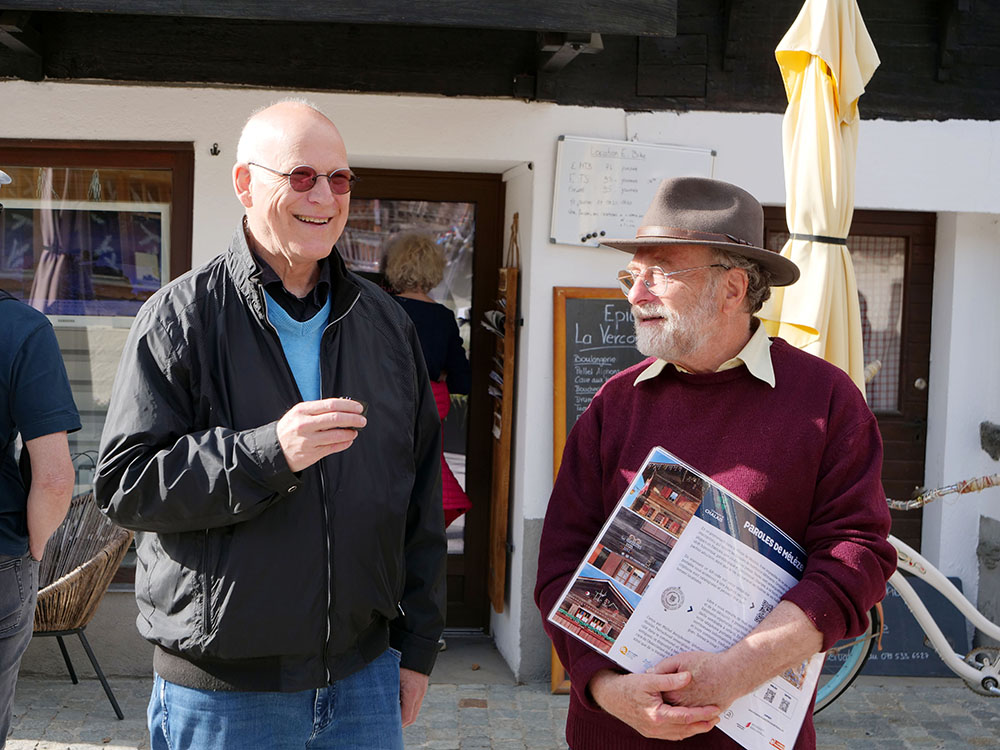
A house, a church, a forge, a tree... every place has a story worth sharing.
Engage your citizens and local associations
Co-create the content with the help of experts or enthusiasts.
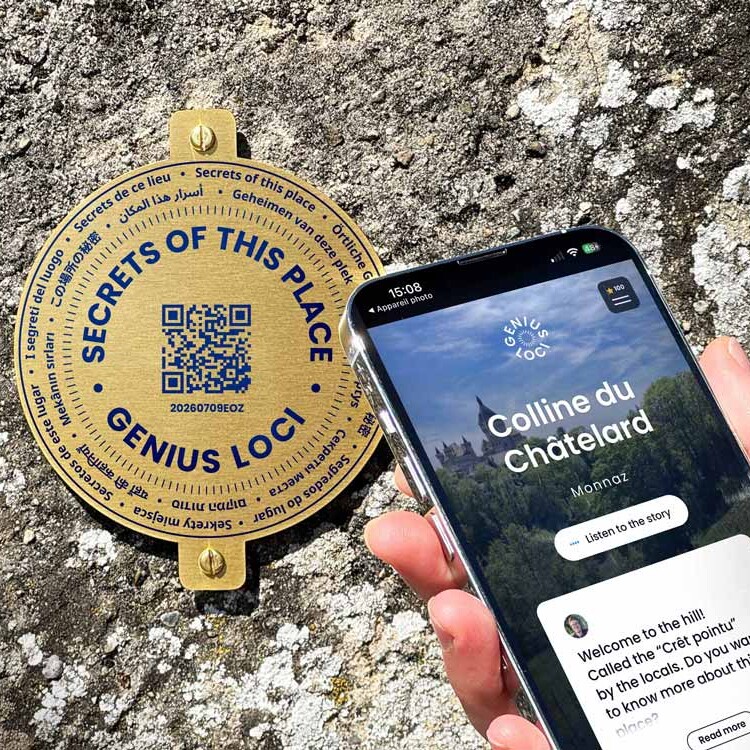
Your city's infrastructure
Connected medals blend easily into your urban environment.
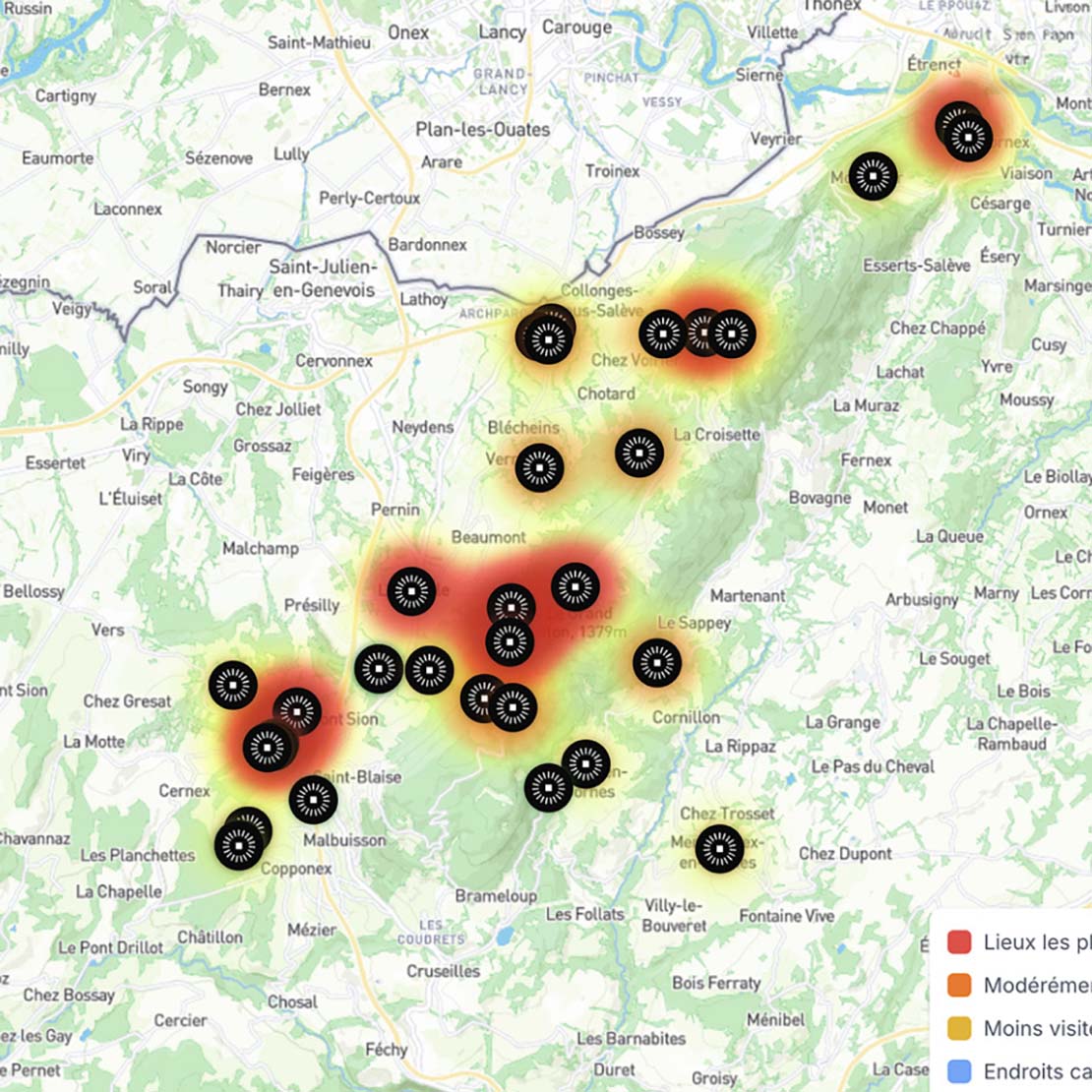
Analyse and optimise visitor flows
Access precise data on the most visited points of interest.
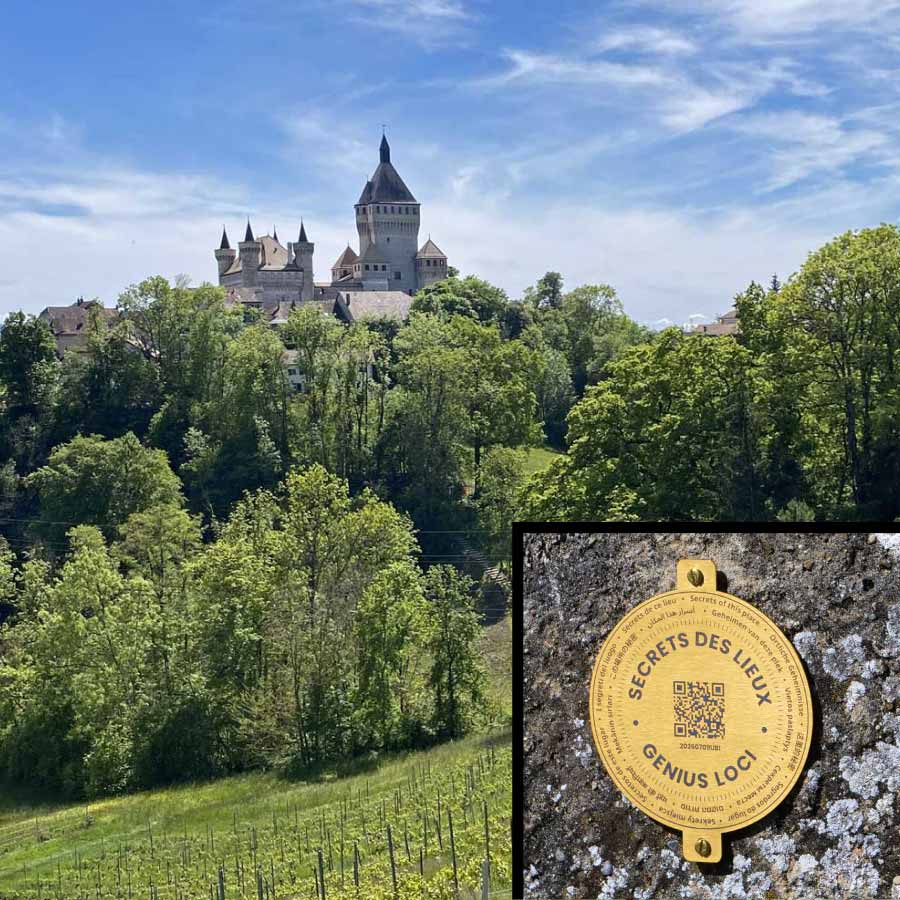
Grow tourism across your region
Build a network of Deep Points of Interest across your region.
In summary
Choosing Genius Loci means making a structuring choice: that of elegance over gimmickry, of universality over niche, of duration over the event-based.
It means considering that heritage deserves an infrastructure worthy of it.
And that every area, whatever its size, can offer a rich, accessible and profoundly human cultural experience.
Conclusion
Heritage does not disappear for lack of value. It disappears for lack of attention.
Genius Loci offers a simple answer: to make this attention visible, accessible and lasting.
Effortlessly. With high standards. And with the respect that places command.
FAQ
Genius Loci is a heritage infrastructure designed for local authorities. A 316L stainless steel medal is installed in street furniture (a bench, a lamppost, a monument) and, when scanned by a visitor, opens an official web page in the colours of the municipality, telling the story of the place. No app to download, no account to create. Each place becomes a Deep POI — a deep point of interest.
Terra Aventura (Nouvelle-Aquitaine Region), Totemus (Walloon tourist offices, published by Ludifica) and Geocaching (Groundspeak Inc.) are gamification solutions based on an app to download, physical objects to hide and an engaged community. Genius Loci meets a complementary need: a permanent heritage signage, managed directly by the municipality itself, with no app, no account and no object to maintain. A lasting infrastructure rather than a playful activity.
Google Maps, Wikipedia and TripAdvisor are general-purpose platforms, useful for finding your way, consulting an encyclopaedia or rating businesses. But they do not allow a municipality to recount its own heritage, and they miss the invisible micro-heritage (forgotten fountains, local legends, oral accounts). Genius Loci gives local authorities an official tool to make the voice of their area heard, anchored directly on site.
A Deep POI (Deep Point of Interest) is a deep point of interest: beyond a simple point on a map, it is a place recounted in depth by the municipality itself, through anecdotes, oral accounts, legends and details that build its identity. It is the central concept of Genius Loci.
All the content produced on Genius Loci remains the property of the municipality that creates it, and can be exported at any time. The visual and editorial identity remains that of the area: it is the municipality that speaks to visitors, not a third-party brand. The accounts shared by inhabitants, associations or enthusiasts remain the property of their authors.
Genius Loci is working on long-term governance of the infrastructure so that the accounts entrusted by local authorities remain accessible whatever the changes within the company. The content can be exported at any time in open formats, and the 316L stainless steel medals are designed to last for several decades.
Genius Loci Aventures is an optional gamification module that adds a logic of stamp collection and rewards on top of the Genius Loci infrastructure. It allows local authorities that wish to do so to offer playful routes and gifts to visitors who complete an Adventure, without imposing this game dimension on those who prefer a free, open discovery.
No. Genius Loci works through a WebApp accessible by simply scanning the medal — no download, no account to create, no code to enter. The experience is immediate and universal, open to residents and international visitors alike, whatever their age or their familiarity with technology.