In Europe alone, there are more than 200,000 towns and small villages. Only 517 are listed to date on the famous UNESCO World Heritage List. Yet these places are far more than dots on a map — they are home to millions of people with their own lives, stories, memories and personal anecdotes to share.
These stories or legends, old or recent, can provide valuable insights into a town’s culture and identity. So many treasures to discover. They are also a collective memory worth preserving — of great value for future generations.
Given the importance of the mission and the scale of the task, it is essential that towns trust their residents, for they alone can truly tell the story of their places.
But why not rely solely on historians, or tourism office staff, you might ask? After all, that is their job…
First of all, residents have a deep personal and emotional connection with the places where they live. They have experienced highs and lows there, joys and sorrows… This gives them a unique perspective on a locality’s history and culture that professionals could not easily convey.
Historians or tourism office employees, despite their role, are not necessarily closely connected to the town. They may have a deep understanding of local history and culture, know the dates and great events — but they will not share the same life experiences as residents born there, for example.
Moreover, although books or Wikipedia are full of facts and figures about great battles, famous figures and grand history, “small heritage” is largely overlooked — yet it is what makes our territories rich. And what genuinely interests people, both locals and passing visitors.
In a slow tourism approach — discovering places at your own pace, in depth, and accessing information unavailable elsewhere.
For a visitor or tourist exploring the town, coming across content created directly by a resident is a treasure, a surprise.
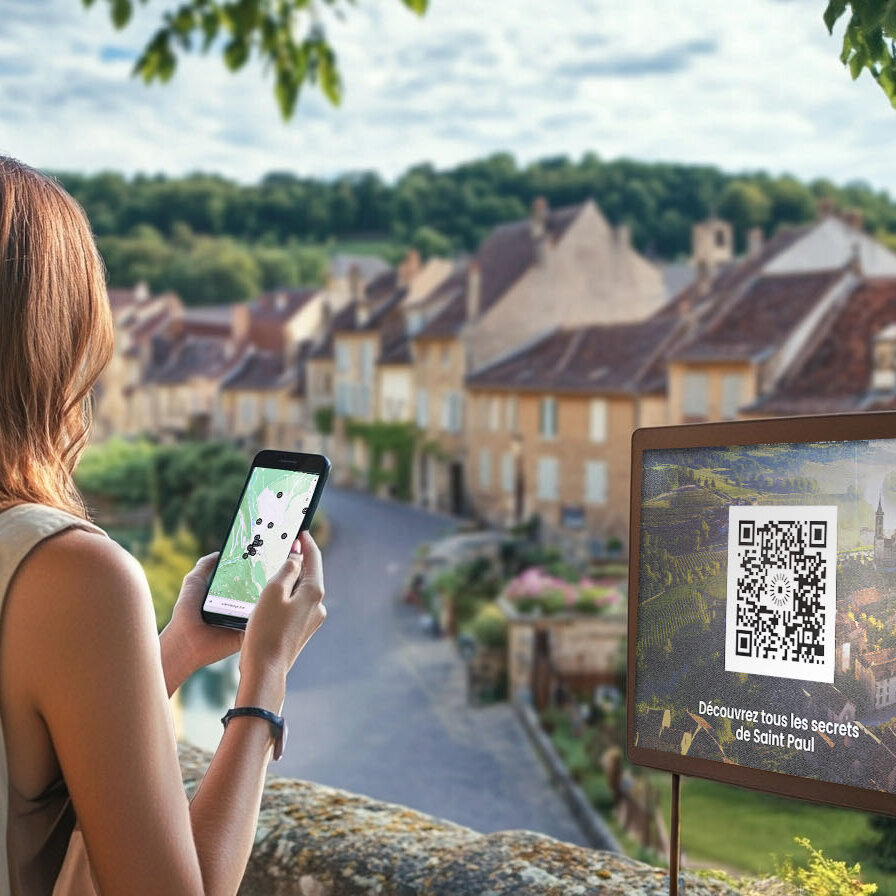
Reading the “Secrets of the Place” in context creates an emotional connection with the location. Far more than an encyclopaedic Wikipedia page or an institutional interpretation panel.
You surely remember a city or monument visit with a passionate local guide — that friendly former geography teacher, hat firmly on head, slipping in a joke or witty remark every other sentence… They shared their love of the place and gave you the keys to understand it, cherish it, and better still: tell others about it!
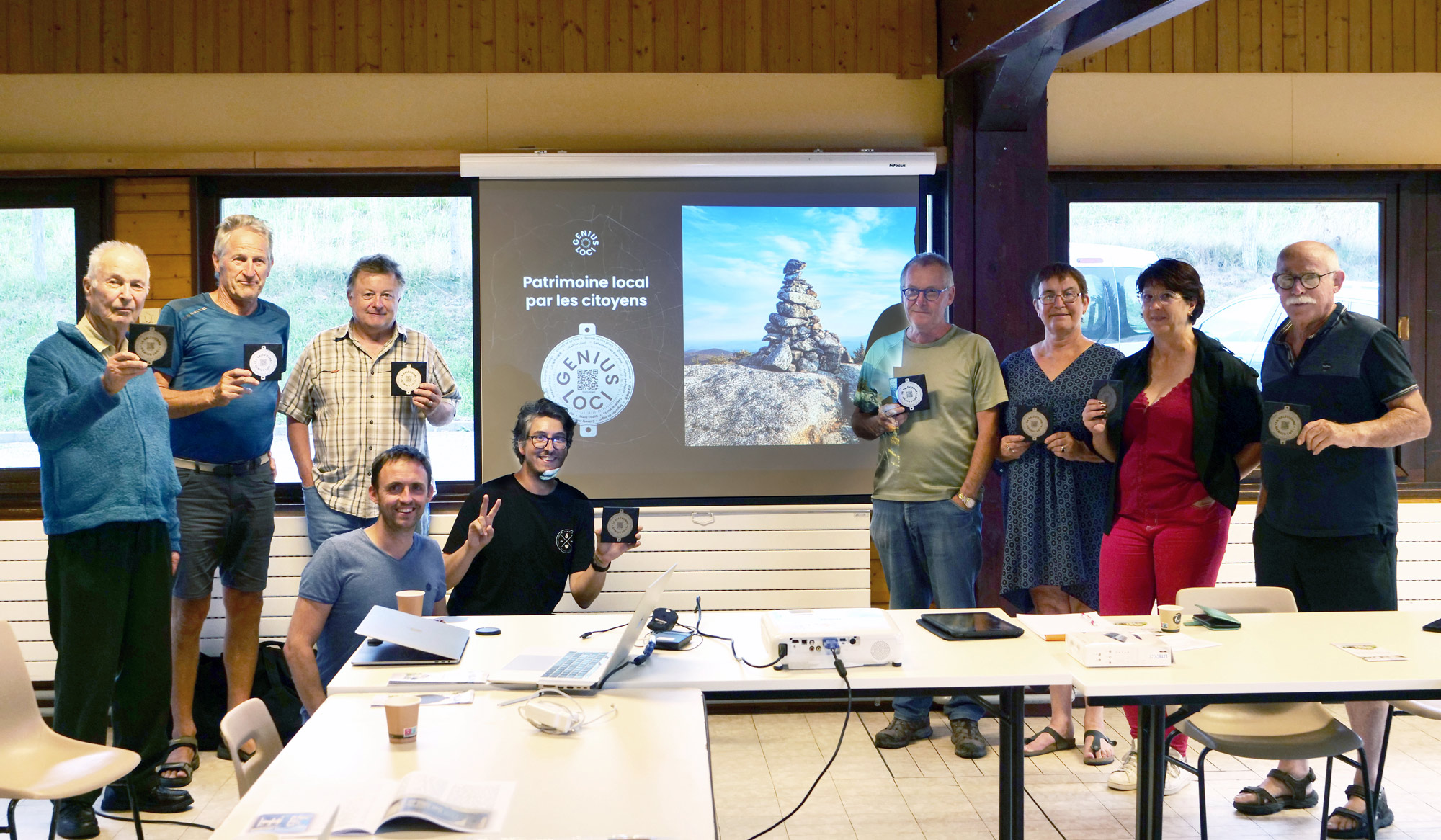
That is the pleasure we want to pass on at scale with Genius Loci medals.
Is there a risk that people will write anything on Genius Loci?
The risk exists, as anywhere, but it is highly unlikely. Our team already keeps a close watch and has put numerous control tools in place — plus features designed specifically for this.
Moreover, given how the platform works (you must scan a physical medal on site to access content), a “troll” would have very limited interest in venting on Genius Loci.
Social networks, for example, offer a platform with unlimited audience and no real means of control. Trolls who thrive on Twitter or Facebook simply have no interest in acting on our platform.
Rather than focusing on the 1% who might harm content quality, we should above all think of the 99% who will write quality content and pass on their passion and knowledge to future visitors.
They are what makes Genius Loci valuable.
In fact, there is a far greater “risk” — that your residents write brilliant content on Genius Loci
Trust placed in residents by institutions helps create a sense of community and belonging. When people feel their stories and experiences are valued and recognised by their town, they feel a strong sense of pride. They have been entrusted with the important mission of becoming “keepers of the place”, and they take that role seriously and devotedly.
What are the benefits for towns?
In conclusion, it is essential that towns trust their residents to share local stories, memories and anecdotes — for many reasons:
- Residents can bring their town’s past to life in an accessible, engaging and authentic way for future visitors — both local visitors and tourists.
- Genius Loci enables heritage showcasing at very large scale across a town or territory. For the price of a single classic interpretation panel, you can deploy around forty medals in many more locations.
- Tourism and conservation professionals have an important role to play, of course — they too can contribute to Genius Loci: defining points of interest, enriching or correcting content, creating routes, bringing coherence… This raises the quality and interest of the content.
- Ultimately, letting residents tell their town’s story will digitise knowledge and preserve collective memory to pass on to future generations.
So when will we see medals in your town?