Technology, artificial intelligence, new economy: driven by technological progress and changing traveller expectations, the tourism industry is constantly evolving. How is this sector reinventing itself through digitisation?

For several decades, tourism — like many other sectors — has faced the arrival of new digital technologies and must integrate them into its strategy in an innovative and intelligent way. It is about adapting to clients’ technology expectations, but above all responding to the trend towards stays that are more experiential, more local, more authentic and more sustainable.
The pandemic accelerated this process. According to Apolitical, since the pandemic most tourism investment has been directed towards digital and technological solutions: foreign direct investment in tourism software rose by 41.9% in 2021 compared with the previous year. This strategy also supports the United Nations Sustainable Development Goals (SDGs), according to the same article.
In this article, we explore two facets of innovation in tourism and examine how they are redefining the modern travel experience: e-tourism and heritage digitisation.
E-tourism at the service of travellers
E-tourism, or electronic tourism, emerged with the adoption of technology by travellers and the tourism industry. It is helping to completely redefine the travel experience. It encompasses services and tools that simplify and enhance the entire journey — from planning and booking to exploring and sharing experiences. Travellers can search and book online, use travel apps, social networks and connected tools. It makes information quickly accessible at any time, allows experiences to be personalised by choosing routes, accommodation and activities aligned with one’s interests, and saves time and money. Today, e-tourism has become the norm — so what innovations can new technologies still bring to the tourism sector?
The potential of digital innovation to reinvent tomorrow's tourism
According to the French Directorate General for Enterprise report, innovation in tourism is above all digital (80%) and focused on user experience. Emerging trends include:
1. Artificial intelligence (AI): AI is used to personalise travel recommendations, improve visitor flow management and deliver more advanced virtual experiences.
2. Augmented reality (AR) & virtual reality (VR): AR and VR technologies enhance the traveller experience by revealing places and sites in a more immersive, interactive way, with new sensations. Very recently, in 2024, the “Eternelle Notre-Dame” exhibition offered a genuine journey through time retracing the cathedral’s construction. This type of showcase remains, however, reserved for exceptional sites.
3. Digitisation of tangible and intangible heritage: Digitising tangible and intangible heritage — the history of buildings, natural curiosities, traditions (traditional music and oral traditions) — is also gaining ground. This last point deserves further attention, as it is precisely the focus we have developed with Genius Loci.
In Europe, only 517 sites are inscribed on the UNESCO World Heritage List. They concentrate showcase initiatives and, unfortunately, sometimes overtourism. With Genius Loci, we wanted to create a modern, sustainable and participatory tool to showcase the 200,000 other villages and localities that struggle to bring their attractions to light.
Digitising tangible and intangible heritage: a new cultural dimension
Heritage digitisation means converting cultural and historical elements — whether tangible (monuments, museums, built heritage, etc.) or intangible (traditions, history, etc.) — and making them accessible to the public online. This opens new possibilities for preserving, sharing and exploring cultural heritage. It can mean making heritage accessible remotely, for example through virtual museum visits from home.
There are nevertheless challenges: digitisation costs, data reliability and quality, copyright protection, and unequal access to technology, which creates a form of inequality. Digitisation also helps preserve heritage elements digitally, reducing wear from physical exposure — and because the memories of our ancestors are being lost.
A growing need for data
More than ever, we live in the age of big data.
Collecting quality data has become crucial for tourism organisations.
These qualitative and quantitative data help analyse visitor flows and infrastructure needs, and improve traveller comfort and experience.
Nine years ago, when we had the idea for Genius Loci, it seemed impossible to deploy digital experiences in the heart of nature — but as technology evolves, capturing 5G even deep in the woods has become commonplace.
Genius Loci connected medals meet the need to digitise heritage and the trend towards local, experiential, social and sustainable slow tourism.
According to UNESCO’s objectives, it is essential to inventory, digitise and make local heritage known — even outside the most touristic regions. As Stéphane Bern puts it, heritage is the only factor of equality between cities and countryside, between our territories. Yet 52% of our heritage is found in municipalities with fewer than 2,000 inhabitants. This is an extraordinary wealth that must be nurtured, showcased, protected and preserved — and that can clearly help safeguard the economic development of territories.
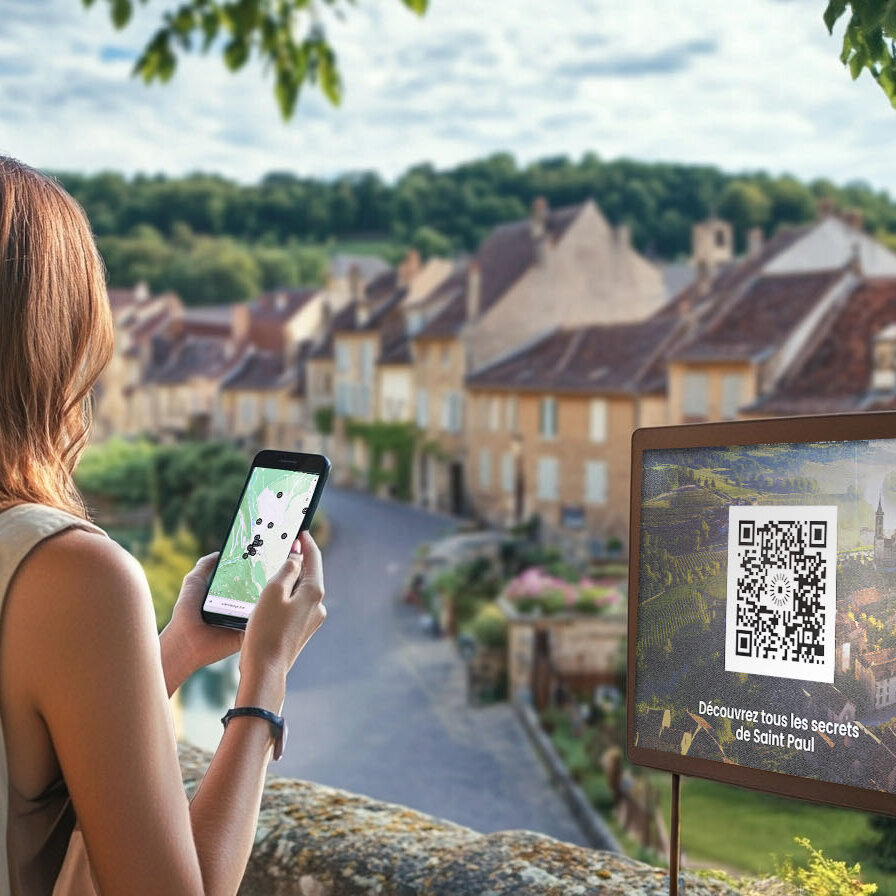
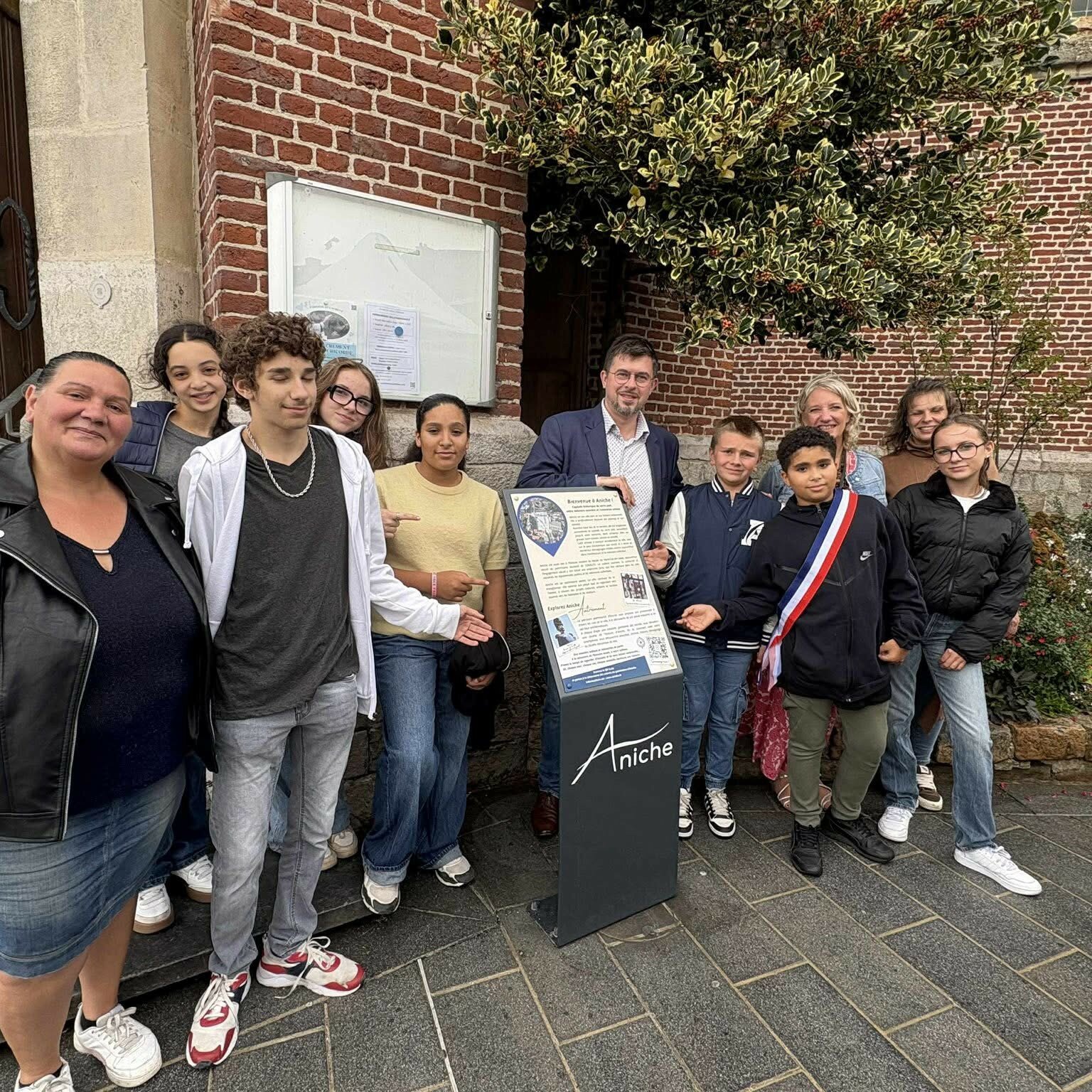
Genius Loci connected medals respond to this need by showcasing a region’s hidden treasures in a sustainable and participatory way. This is phygital tourism signage — both physical and digital:
- A “medal” in particularly durable stainless steel, designed for outdoor use. It is placed at a point of interest, carries a unique QR code and provides access to the place’s content.
- A digital space dedicated to the point of interest, accessible on site to visitors only. It is managed by locals passionate about nature, culture or history, under the supervision of municipalities acting as contributors and moderators.
Current features allow sharing text and images, integrating unlimited video and audio, and locating nearby medals via a “proximity radar” mode. Content can be liked and commented on, and co-created. Any trusted person can be invited to write content on the digital interface — the aim being to involve residents with rich, emotional stories. Ultimately, this creates a bridge between the older generation who hold the knowledge and younger generations eager for new technologies.
Innovation in tourism — especially through e-tourism and heritage digitisation — has transformed how we travel, explore cultural heritage and interact with the world around us. These advances offer many opportunities for a more immersive, more local and more sustainable travel experience.
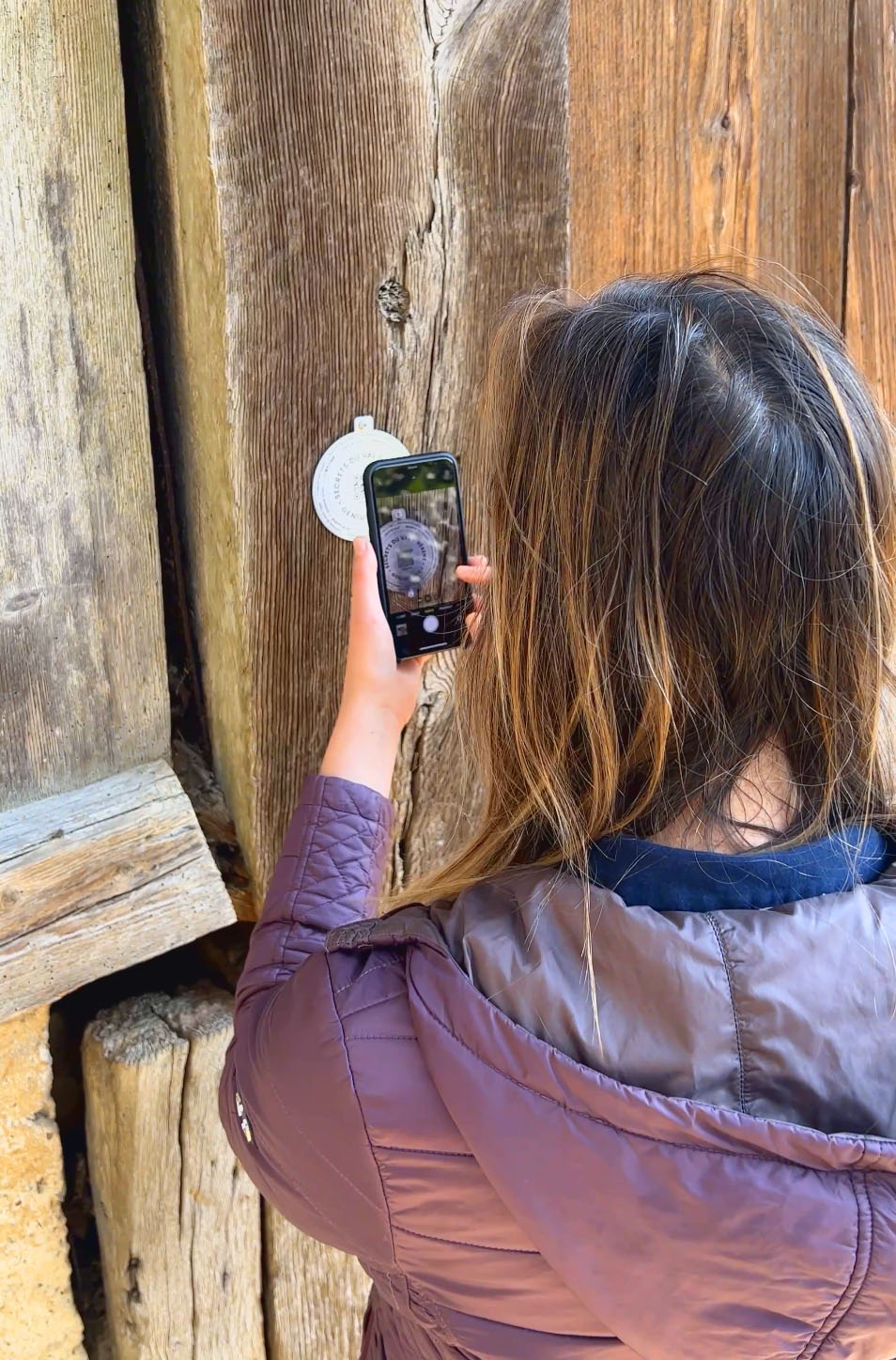
Safeguard and showcase your local heritage with Genius Loci
Designed for Europe’s 200,000 towns and villages, our product is both physical and digital: a 10 cm brushed 316L stainless steel medal, engraved with your project name and fitted with a QR code. A single scan unlocks an exclusive digital space, revealing the secrets of the place. The medals operate as a network of Deep Points of Interest, enabling heritage enhancement at scale — across multiple municipalities, regions, or départements — so that they can take back control of their narrative, in the face of the platforms and generative AI tools that currently dictate it.
Management interface
- Venue management
- Content co-creation
- Statistics
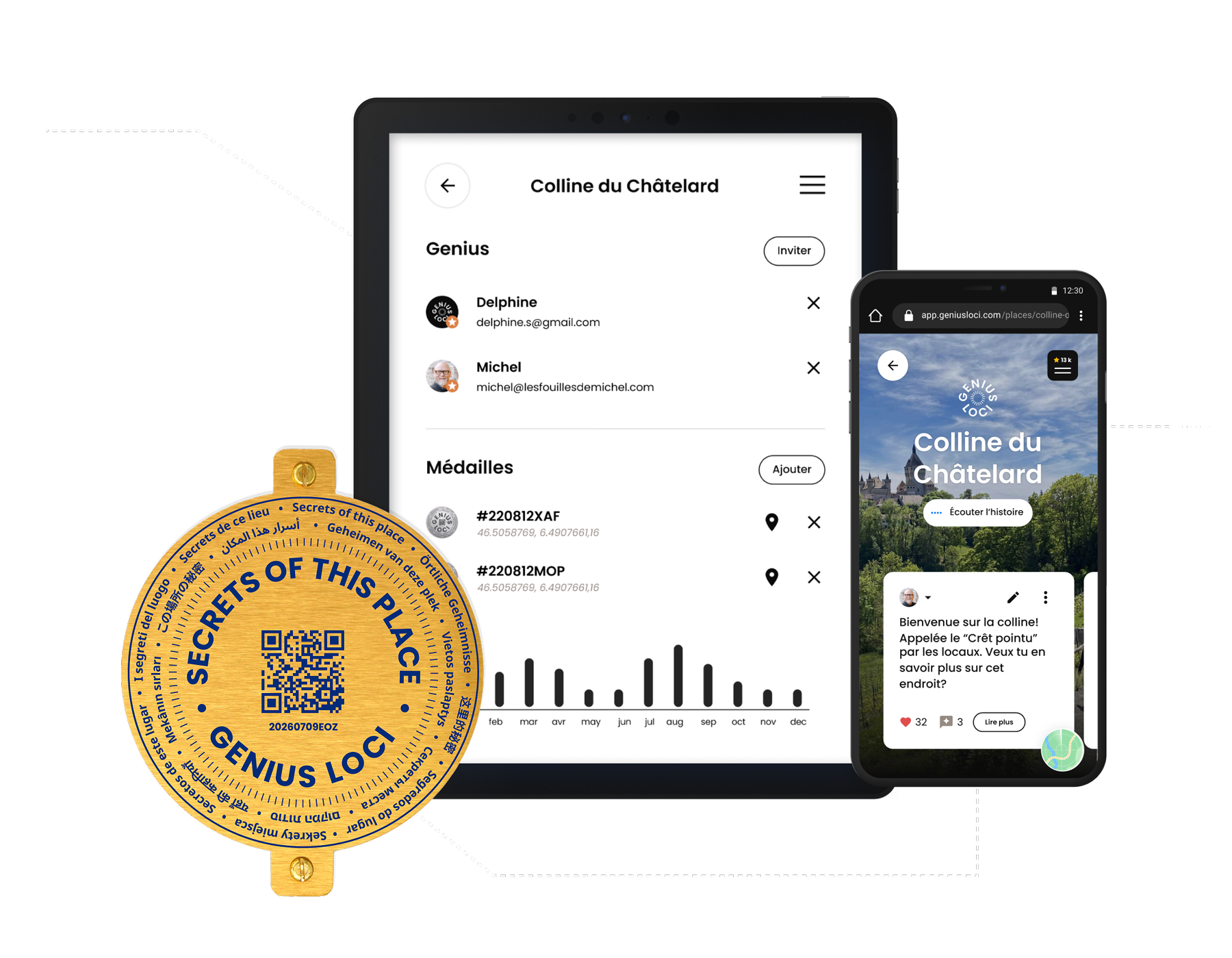
Stainless steel medal for every location
Digital interface
- Your content, beautifully presented
- One scan — no app required
- One-click translations
Safeguard and showcase your heritage with Genius Loci.
Designed for Europe’s 200,000 towns and villages, our product is both physical and digital: a 10 cm stainless steel medal, engraved with your project name and fitted with a QR code. A single scan unlocks an exclusive digital space, revealing the secrets of the place.
Admin interface
- Venue management
- Content co-creation
- Statistics
Digital interface
- Your content, beautifully presented
- One scan — no app required
- One-click translations